
The challenge
The Maryland State Department of Education needed to reach families, unaccompanied youth, and school staff with the same essential message: under the McKinney-Vento Act, students experiencing homelessness or housing instability have the right to enroll in school immediately, stay in their school of origin, and access the services they need to succeed.
The audience is broad and the subject is sensitive. Parents in shelters, teenagers couch-surfing, teachers looking for a resource to hand a family, district liaisons rolling out a statewide policy — each needs different information at different moments, and the message has to feel supportive rather than clinical or stigmatizing.
MSDE needed a body of ready-to-deploy assets that districts across Maryland could pick up and use immediately, without a design team of their own — while staying visually cohesive, ADA-compliant, and unmistakably tied to a single statewide effort.
Our approach
We led both strategy and creative execution: defining the campaign architecture, writing the messaging framework, and designing every asset in the toolkit.
The work is organized around three connected campaigns — education rights, childcare and family support, and financial aid — each with its own social series, captions, and downloadable graphics. Every post drives to a single hub (marylandpublicschools.org/schoolhelp) and every asset can stand alone or run as part of a sequence.
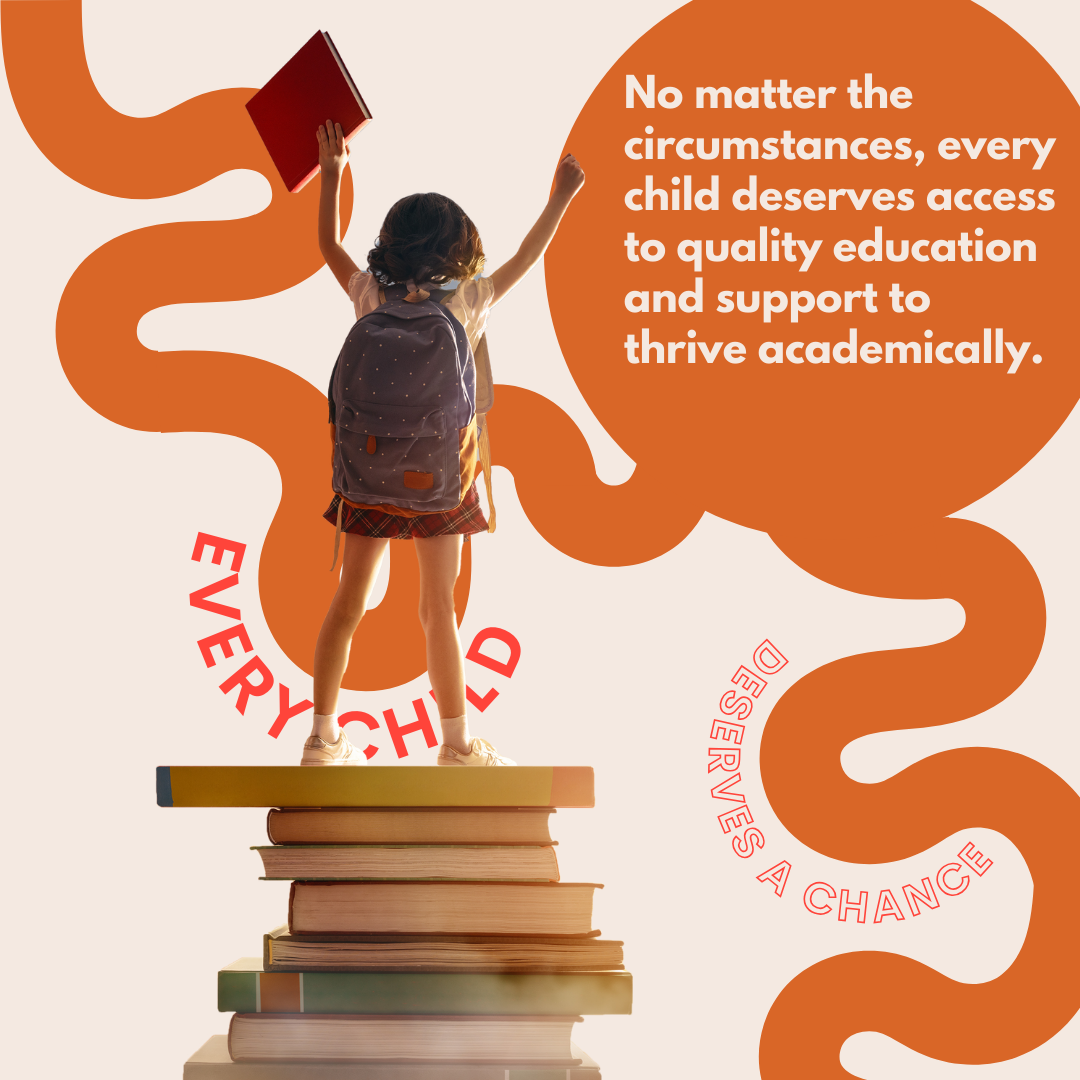
For print, we produced four posters and four flyers written for distinct audiences: parents encountering the program for the first time, youth who may be navigating their situation independently, and educators and liaisons who need to explain rights and resources at a glance. We varied the tone deliberately — warm and reassuring for families, bolder and more direct for youth, functional and reference-oriented for staff — while keeping the visual system unified.
Throughout the process we coordinated feedback with MSDE program staff, youth advisory committees, and local district liaisons, iterating on tone and terminology so the language reflected the lived experience of the students being served. Every deliverable was designed to ADA standards: color contrast, legible type hierarchy, plain-language copy, and multi-format exports (square, story, and print) so districts could deploy the same message across whatever channel they had.
The result
The toolkit gives Maryland a coordinated statewide voice on an issue where fragmented communication used to be the norm. Districts across the state can now run a professionally designed campaign without producing anything from scratch.
The three-campaign structure covers the full arc of what an unhoused student or family needs to know — their right to be in school, the wraparound supports available to them, and the financial pathways that keep them there — in a form that meets people where they already are: on social feeds, on classroom walls, and in the hands of the liaisons who help them enroll.
Most importantly, the work treats its audience with dignity. The design signals that this is help offered as a right, not a favor — which is exactly what the McKinney-Vento Act promises.